
How Brainwaves Influence Ski Performance and Getting Into “The Zone”
Have you ever had one of those magical runs where everything just clicks? You feel completely in sync with the mountain, every turn flows into the next, and time seems to slow down. Skiers call this elusive experience “The Zone”, or the flow state. It’s one of the most sought-after feelings in sport — and it’s not just about muscle memory or practice. I recently had the honour of speaking with Canadian Alpine Ski Racer and 4-time Olympian, Manny Osborne-Paradis about skier development and Visualization. We briefly touched on state-of-mind and different brain waves that we experience before-during-and after skiing.
What’s really happening in those moments of peak performance? Your brain enters a different state. It quite literally changes its frequency to operate on a level optimized for instinct, precision, and presence. By understanding how your brain works during skiing, you can train your mind just as intentionally as your body. That’s where the five key brainwave states come into play.
Let’s take a closer look at the Beta, Alpha, Theta, Delta, and Gamma brainwave frequencies. We will explore how each one impacts your skiing.
🔹 1. Beta Waves (12–30 Hz)
The Thinking Mind – Focused but Easily Overloaded
Beta is your everyday mental state — the one you use at work, when driving, or planning your ski trip. It’s associated with active thinking, logic, decision-making, and problem-solving. On the slopes, Beta is great for learning new skills, understanding terrain, and staying alert.

However, too much Beta can quickly become a performance roadblock. When your brain is running on high Beta, you’re prone to overthinking:
- “Am I edging enough?”
- “What’s my pole plant doing?”
- “What if I fall here?”
That voice in your head — the chatterbox — can turn Beta into stress, hesitation, and poor performance. It’s why skiers often struggle most when they’re consciously trying to “get it right.” Instructors may call it “paralysis by analysis.” The key is learning what Beta is good for — and knowing when to move beyond it.
🔹 2. Alpha Waves (7.5–12 Hz)
The Gateway to Flow – Calm, Focused, and Fluid
Alpha is the sweet spot between being fully awake and deeply relaxed. This brainwave state kicks in when you’re focused but not overthinking. It’s like when you’re cruising a groomer on a sunny day. You are fully in the moment, letting your skis do the work.

Skiers in Alpha tend to:
- Absorb instruction quickly
- Feel connected to their environment
- Trust their body’s instincts more
- Start to “feel” the terrain instead of analyzing it
This is the ideal learning state. Whether you’re a beginner or a high-level racer, Alpha allows your brain to process and retain information faster. When you’re in Alpha, you’re more in tune with your body and surroundings. Your skiing becomes smoother, more rhythmic, and more intuitive.
Tip: Visualization, deep breathing, or even music before a run can help your brain settle into Alpha.
🔹 3. Theta Waves (4–7.5 Hz)
The Flow State – Welcome to “The Zone”
Theta is the holy grail for athletes. It’s the state where conscious thought fades and performance becomes automatic. In this state:

- You stop thinking about your technique — you just do it
- Time feels like it slows down
- Your reactions are instant and accurate
- You’re fully immersed in the run, free from fear or distraction
Skiers describe this as being “in the zone.” It’s often experienced during high-speed descents, challenging terrain, or powder days when everything just flows effortlessly.
What’s fascinating is that Theta isn’t something you can force. You enter it naturally when you’ve practiced enough to let go of conscious control. The brain shifts gears — and you ride the wave.
Pro tip: Many elite athletes use visualization and mindfulness techniques to help access Theta more consistently. It’s a trainable skill — and it starts with learning to relax and trust your training.
🔹 4. Delta Waves (0.5–4 Hz)
The Deep Reset – Rest, Recovery, and Growth
Delta is not for skiing — it’s for sleeping. But it’s essential to skiing better.

Delta brainwaves occur during deep, dreamless sleep, where the body does its most intense healing and recovery. This is when:
- Muscles repair
- The brain consolidates learning
- The nervous system resets
A good night’s sleep with plenty of Delta wave activity helps lock in the skills you worked on that day. So if you’re working hard on your skiing — physically or mentally — you need to give yourself proper rest. Otherwise, you’re missing a key part of development.
Pro tip: Treat sleep as part of your training regimen. Prioritize quality rest before and after big ski days.
🔸 5. Gamma Waves (32–100 Hz)
The Peak of Awareness – Sharp, Fast, and Fully Present

Though less commonly discussed, Gamma brainwaves play a fascinating role in skier development — especially at the elite level. These are the fastest measurable brainwaves and are linked to heightened perception, rapid learning, and advanced problem-solving. Gamma waves may be at work when you’re navigating a complex line. They might also be active while you adapt instantly to variable snow. Another opportunity for their engagement is when you anticipate other skiers’ movements. This state represents a kind of supercharged awareness, where multiple brain regions synchronize and process information simultaneously. While rare in day-to-day life, Gamma activity is often stronger in highly trained minds. This is true for long-term meditators or elite athletes. Skiers need to develop the ability to stay calm under pressure. Making micro-adjustments in real time may be tied to short bursts of Gamma. These bursts are the mark of true mastery on the mountain.
🧠 Train Your Brain, Improve Your Skiing
Understanding these five brainwave states isn’t just cool science — it’s a practical way to elevate your skiing:
- Use Beta to learn the basics, plan your line, and stay alert.
- Move into Alpha to absorb coaching, find rhythm, and enjoy flow.
- Tap into Theta to unlock your best runs — fast, fluid, and free.
- Recharge with Delta to recover, grow, and come back stronger.
- Cultivate Gamma for peak awareness, fast reactions, and instinctive decision-making.
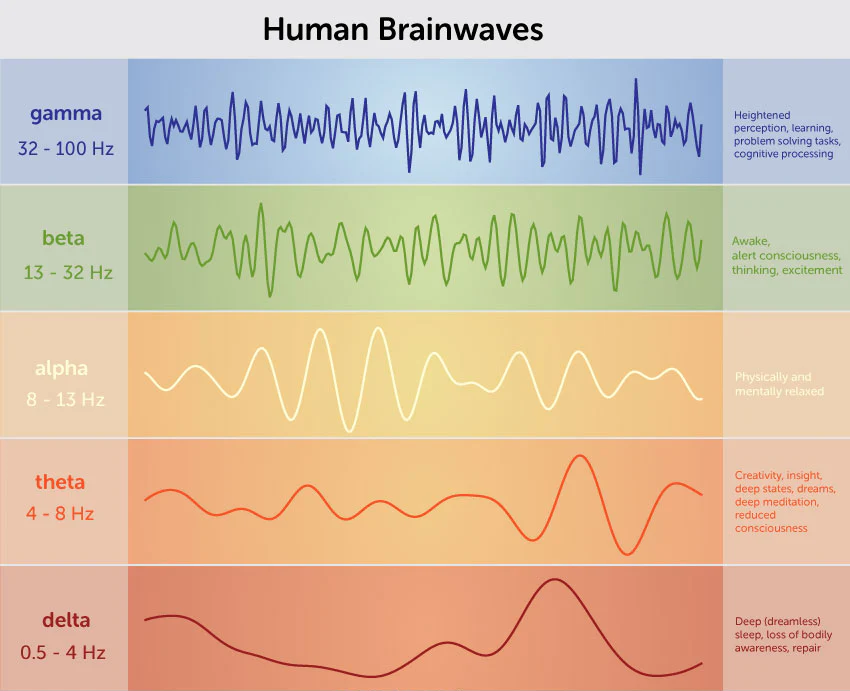
The real takeaway? The best skiing happens when you’re not thinking about skiing. That’s the magic of flow — and it’s a skill just like carving or balancing. With tools like visualization, meditation, and conscious practice, you can train your mind to shift states more easily.
Final Thoughts: The Mental Edge on the Mountain
Skiing is one of the few sports where your environment — mountains, snow, weather — demands total presence. And that’s what makes it so powerful. When your brain and body align, even just for a few turns, it feels like freedom.
So next time you click into your bindings, take a breath. Tune in. And trust the process. The mountain is waiting — and so is The Zone.
🧠⛷️ Want more content on the mental side of skiing? Stay tuned to SkiChatter.com for expert insights, athlete interviews, and tools to help you ski better from the inside out.
🔖 #SkiChatter #SkiInTheZone #FlowStateSkiing #SkiBrainwaves #MindfulSkiing #PeakPerformance #SkiDevelopment #MentalEdge #TrainYourMindSkiYourBest @manny_ski
